
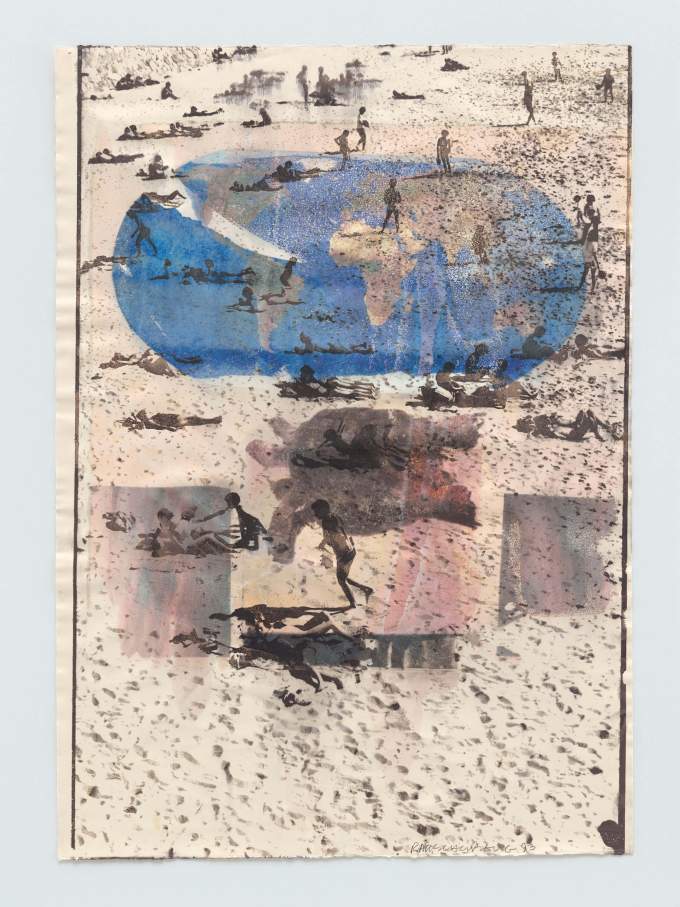
Robert Rauschenberg, Original artwork for U.N. World Population Conference print and poster (Waterworks), 1993. Inkjet dye transfer on paper, 41 1/2 x 29 1/2 in. (105.4 x 74.9 cm). Robert Rauschenberg Foundation. Photo: Ron Amstutz
Rauschenberg's New York Summer
Robert Rauschenberg spent decades exploring the United States and abroad, but New York City remained a constant point of return, an urban laboratory where heat, image, and motion collided. The city’s sensory overload, with its asphalt, glare, and proximity to water, echoes something essential in his work: a layering of environments, from streets to shorelines, from the ephemeral to the mechanical. In the thick of this New York summer marked by a historic Knicks win and the global spectacle of the FIFA World Cup, the city feels newly electric, offering a lens through which to reconsider how Rauschenberg captured the rhythms of summer in the city.
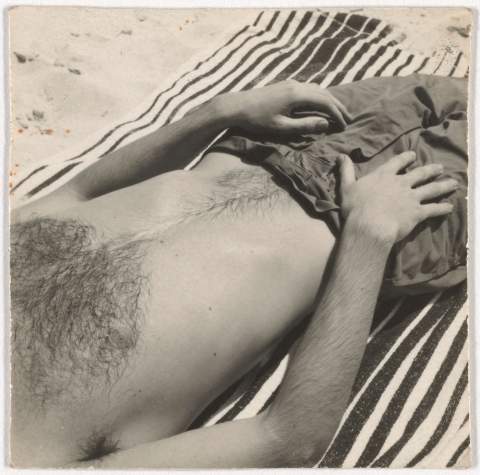
A photograph Rauschenberg took of Cy Twombly on Staten Island beach around 1951 depicts a respite from the Manhattan heat. The image, which appeared on the cover of the April 2026 issue of Artforum, is a “mystery in the sunlight that’s reminiscent of Newhall’s quiet picture of a dune, and the queer vegetation growing out of that body of sand,” writes Hilton Als for The New Yorker. It depicts “the torso of a man lying on a striped towel, his hands placed a little awkwardly on his swimming trunks. His head isn’t visible; the focus of the image is the swirl of hair on the man’s chest and at his waist, pointing toward what is concealed in his trunks.”
The beach is not always sensual in Rauschenberg’s oeuvre. In his original artwork for the United Nations World Population Conference print and poster, which is part of his Waterworks series (1992–95), Rauschenberg overlaid a world map and his pet turtle “Rocky” on a beach scene. The result, originally created for the 1994 U.N. World Population Conference and currently on view at the National Air and Space Museum as part of The Ascent of Rauschenberg: Reinventing the Art of Flight, is at once buoyant and uneasy: a shoreline image that suggests leisure, but also environmental pressure and planetary interdependence. That tension reverberates through his broader practice, including the Earth Day poster he created in 1970. Across these works, water is not merely scenic - it is ecological, political, and social.
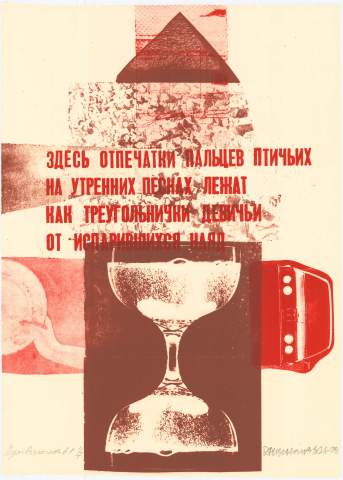
The beach is also at the center of Long Island Beach (1978), a lithograph including text by the Russian poet Andrei Voznesensky. The prints were exhibited at the legendary Leo Castelli Gallery in New York in 1979. While the association of an artist from Texas and a poet from the then-USSR may seem unlikely, it is indicative of Rauschenberg’s interest in international exchange and cross-disciplinary experimentation. In 1988, he traveled to the USSR for the first time in preparation for the ROCI USSR exhibition at the Central House of Artists, Moscow, in February 1989.
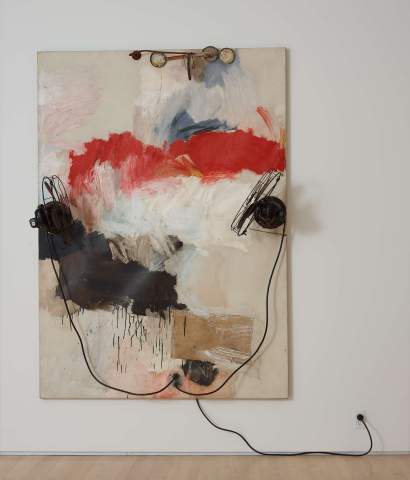
The beach is never just a place of leisure, it is a way of negotiating heat - seeking out breeze, water, and temporary relief from the sun. Back in the city, that same search for relief took a more mechanical form. In Pantomime (1961), Rauschenberg incorporated two functioning electric fans, the hallmark of survival for any New Yorker without air conditioning during the summertime heat. Part of a group of artworks the artist called Combines (1954-64), Pantomime collapses the boundary between painting and sculpture, incorporating everyday objects.
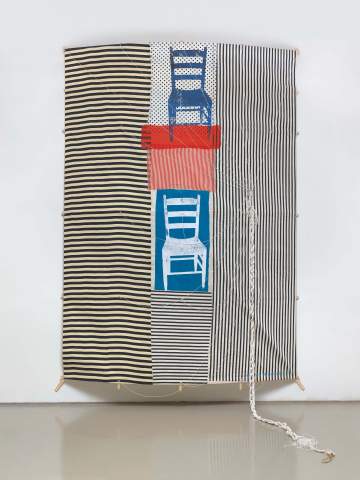
Sky House I (1988), now on view at the National Air and Space Museum as part of The Ascent of Rauschenberg: Reinventing the Art of Flight, extends Rauschenberg’s interest in dissolving the boundaries between interior and exterior space. Conceived as a large-scale kite at the request of the Goethe Institute for an International Art Kite Festival in Japan, the work exits the confines of the gallery to enter the shifting weather conditions of open air. As with his Combines, Rauschenberg brings together disparate materials and image fragments, and the artwork becomes activated in flight, where light, wind, and movement continually alter its appearance.
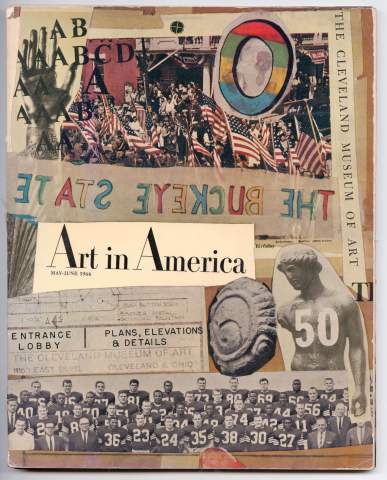
The summer also marks the anniversary of the United States’ independence. This year, the milestone is even more significant as the country honors 250 years of history. Robert Rauschenberg's 1966 cover for Art in America offers a timely reflection on what it means to depict America. For the cover, he assembled photographs of Ohio with artworks from the Cleveland Museum of Art to celebrate the Museum's fiftieth anniversary into a single sprawling collage. Rather than depicting a monument or historic event, Rauschenberg constructed a portrait of America through its people, places, and cultural institutions. Just ten years later, in 1976, the National Collection of Fine Arts (now the Smithsonian Museum of American Art) selected Rauschenberg to honor the American Bicentennial with a mid-career retrospective.
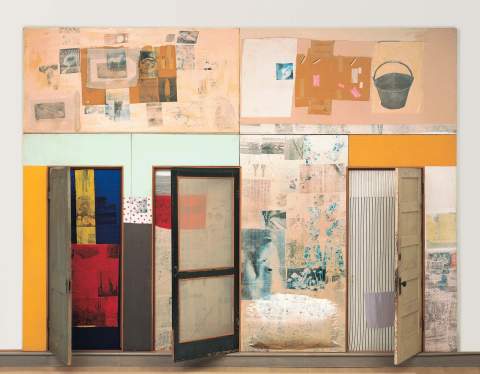
In 1976, the Fort Worth Art Museum commissioned Rauschenberg to create a work for The Great American Rodeo, an exhibition celebrating that summer’s Bicentennial celebrations. Rodeo Palace (Spread) (1975–76), which does not portray the rodeo but rather the glamour and grit of a rodeo performer’s life, is in many ways a celebration of Rauschenberg’s roots, containing references to his own experiences both past and present. This work was later exhibited in his aforementioned mid-career retrospective in Washington, D.C., in 1976.
Rauschenberg’s vision of summer, like his vision of America, is never fixed. It flickers between friendships and environmental awareness on the beach, between the open sky and the crowded shore, between the monumental and the everyday elements that compose our country. Whether through the circulation of air in Pantomime, the lift of a kite in Sky House I, or the dense layering of images in his prints, his work insists on movement.
To look at Rauschenberg in the context of a New York summer is to recognize how deeply attuned he was to the conditions of lived experience. Fifty years after the Bicentennial, and in the midst of another charged summer, in which the city remains a site of overlap and intensity, where global spectacle and everyday life collide, that vision feels as relevant as ever.